Saturday, April 30, 2016

手机游戏: Top Cell Phone games in China

qqEver wonder what the most popular mobile games are in China?  I know, I think about it all the time too!  :) Well, these are among the top games people like to play on their cell phones while in China:


  • Angry Birds
  • Subway Surfers
  • Anipop
  • Happy Lord 
  • Pop Start

You're task is to download at least one of the games and play around with it!  After you're finished, answer these questions:


  1. How did you enjoy playing?
  2. What genre does this game fall under?
  3. Is this a popular game in America? Why or why not?
  4. Given what you know about Chinese culture, why do you think this game is so popular there?

日常的学生活:A day in the life of a Chinese High Schooler

What's it like to be a Chinese High School student in China?  Are they similar or vastly different from what you've experienced?  Follow along on this TedEd lesson and let me know what you think.

Comparing Chinese and American High Schools, who has the most rigid schedule and studies?  Who's better off once they finish High School?  Are you grateful of your high school experience or envious of the Chinese High School experience?

中国快餐:McDonalds in China

As mentioned before both on this blog and in class, McDonalds has a strong presence in China.  In fact, it's rapidly growing in China.  Read or listen to this story on The Chairman's Bao and save any keywords or grammatical points that you don't understand and we will go over them in class.  Also, be sure to read the article carefully as you will have a quiz in class as well.

If you're unfamiliar with The Chairmans Bao and how it works, please watch the short video below.  Please note, you will not be able to see keywords or save terms to your dictionary if you do not register.


篮球的印象:The Iconic Stephon Marbury

Most professional athletes would consider themselves pretty accomplished if they were recognized as an All-Star in their respective sport, won multiple championships and elected to the Hall of Fame.  You're really, really great if you get a statue built in your honor like Michael Jordan, Wayne Gretzky or Tom Landry.  However, China honored one of it's biggest sports stars recently by not just building a statue in their honor but also open a museum!  And it's not for Yao Ming or Li Na...it's for Stephon Marbury!  Click on the picture to read the story and answer the following questions in at least 2 paragraphs:


  1. What team does Stephon Marbury play for in China and how many championships have they won?
  2. Marbury was recently honored with an award.  What was it?
  3. What are some of the other ways China has honored Marbury?
  4. What aspect of Chinese culture makes an honor like this possible?  In other words, what is it about Chinese beliefs that would allow them to recognize Marbury in this way?  Explain your reasoning

高档运动:What are the top 5 sports in China?

In America, Football, Baseball, NASCAR, Basketball and Hockey are the most popular and watched sports.  Can you guess which sports are most popular in China?  Take the quiz below to see


Sunday, March 13, 2016

Who's hot in Music in China?

While traditional Chinese music (opera) is still relevant in China, you'll find that most younger people listen to the same kind of music Americans do.  Pop has definitely found it's place in the middle kingdom.  Who is it that local Chinese still adore?  Here's a short gallery of popular artists.  Not everyone is here but the biggest are:

Fresh off the plane Chinese

Want some survival Chinese in about 5 1/2 minutes?  Watch this video from graspchinese.com.


Can I really eat out for $3 USD in China?

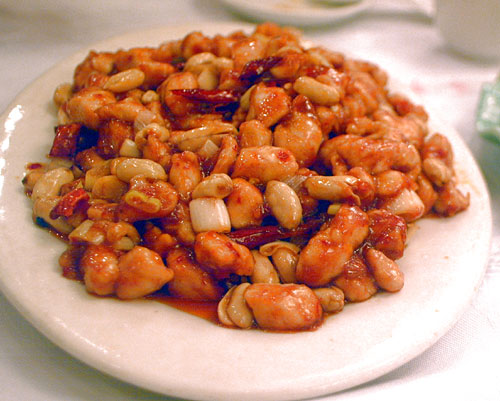
Kong Pao Chicken


The answer to this question: YES!  And you can eat quite well too.  $3 USD is about 20 RMB, which is around the amount I would spend when eating out with colleagues during our lunch break.  One of my favorite dishs (apparently a favorite of all western visitors to China) was kong pao chicken with rice from a small restaurant near my apartment.  This would usually cost me about 15 RMB ($2.31 USD).

The key to eating out for cheap in China: eat at local restaurants.  There are more famous establishments and plenty of places that serve western food.  However, these places tend to be much more expensive.  Besides, eating at local restaurants introduces you to genuine Chinese cuisine.  Take a look at these commonly ordered dishes from local spots.

Also, remember that there's no tipping and no taxes in China.  So the price you see on the menu is the price you pay!  Awesome huh?!

Popular misconceptions of China by Hollywood

There's no doubt that popular culture, especially movies, play a huge part in how we view different cultures that we simply don't know much about.  If we seek to know more about India, we tend to look to Bollywood to shed some light on that region of the world.  Even if we seek to know more about a certain ethnicity within our own country, we like to check out popular movies that talk about that culture.

Many of the views Americans have on Chinese are shaped by two main outlets: news and movies.  I'd like to take a look at some misconceptions that exist thanks to popular movies such as Crouching Tiger, Hidden Dragon, Milan, Rush Hour and others:

Misconception #1: All Chinese people know some form of Karate

By far the biggest misconception, knowing Karate is not some sort of rite of passage for Chinese natives.  While the art form has it's roots in Asian countries, it does not mean that every citizen of China knows it.  In fact, it's quite the opposite.  In my two years living and working in Beijing, home to over 20 million people, I rarely came across people who engaged in any form of tae kwon do, karate or kung-fu.

Misconception #2: Chinese people only speak Chinese

Another huge misconception is that if you were to visit China, you would be surrounded by people who did not speak English, therefore, you were certain to get lost, be led astray by thieves and never be able to find your way back to America.  In reality, there are many more Chinese people that speak English than Americans that speak Chinese.  Some estimates have it that as much as 50 to 150 million Chinese people speak English, with higher concentrations in major cities such as Beijing and Shanghai.  That's over 10% of the population.  Compare that to less than 1% of Americans being able to speak Mandarin and this misconception becomes very obvious.

Misconception #3: Chinese culture is COMPLETELY different from American culture

Hutong
Hollywood movies tend to cast China in a light that would have viewers think that the cities are overcrowded, everyone lives in hutongs and that there are few modern amenities available.  While much of this does still exist, it's not nearly as prevalent as modern skyscrapers and apartments, ginormous entertainment megaplex's and all (if not more) of the amenities we enjoy in America.  I always share with people that Beijing was the best nightlife experience I've ever had.  While the cities are overcrowded, it's not unbearable and only really noticeable in major cities such as Beijing or Shanghai during commutes to and from work.  If you've ever visited New York City, it's essentially the same environment.  I also share with people that the nicest, most modern apartments I've ever lived in was in Beijing.  Not only is the social life similar to America in Chinese cities such as Beijing or Shanghai, it may even be better!

Misconception #4: Chinese cuisine is COMPLETELY different and weird!

Like any country you visit that's not your own, the cuisine will be unique to that region.  Therefore, it will likely be different from your home country.  However, Chinese food is not so different that it's weird or grosses you out.  It's actually very, very good.  It's nothing like the Americanized Chinese food that we like to order, such as shrimp fried rice or General Tsao's chicken.  It's more unique to the region it's served in but always very delicious.  No scorpions or pigs snout are usually served in restaurants, though there are places you can get them.  And if you're just in the mood for American food, you can check out KFC or McDonalds, which is usually on every major street corner in major cities.


Monday, November 30, 2015

Podcast for Class

Happy belated Thanksgiving everybody!  I hope that you had a great, restful holiday with those you care for most.  I also hope you were able to move after indulging in so much food.

I think one of the more misunderstood audio technologies out there has to be the podcast.  I know for me, I used to think that you needed an iPod in order to listen to a specific podcast.  Also, I wasn't sure what the advantages of a Podcast were and since it was unfamiliar, I completed ignored this technology.  However, this week, thanks to this helpful video explaining what podcasts were in about 2 minutes, I was able to get a grasp on the benefits of this technology.  In short, it's the DVR of audio, allowing you to listen to a variety of broadcasts on demand.  And you don't need an iPod just to listen (note to self).  Just subscribe to the specific podcast you'd like to listen to and it's available to you.

In my quest to explore technologies that are useful in the 21st century Mandarin Chinese classroom, I found some examples of Podcasts that were enjoyable to listen to but also helpful for my future classroom.  One in particular is called "Popup Chinese", which is a podcast that is different from traditional "textbook-centric" learning methods, and has made them the highest rated Chinese podcast series on iTunes.  The particular podcast I listened to is for what they classified as absolute beginners and is called Let Me Do It, Myself.  This episode talked about the difference in pronunciation among particular speakers and is very easy to understand, even without any Mandarin background.

This could be used to help with a couple of specific learning objectives for Languages Other Than English:

  • Model how spoken language, body language and social interaction influence communication
  • Recognize that there are important linguistic and cultural variations among groups that speak the same target language.
The conversation and topics this podcast offers regarding the uses of Mandarin, along with teaching various phrases and words, are ideal for learning about HOW the language is used and not just speaking the language.  I'm looking forward to students being able to utilize these podcasts to learn more.

Monday, November 16, 2015

Comic Kids

I don't see it too often with this generation of kids but there's nothing that makes one reminisce on childhood like a good comic strip.  Though there are a ton of adults around that still read and collect comic books, most of them began their obsession with this genre when they were kids.  The comics themselves are fascinating in nature.  The animation accompanied with written narration and dialogue make it so much more visual than your typical book but also capitalize on one's imagination similar to well-written literature.  There's no doubt that comics can be a great way to tell a story.

So why not include them in the classroom as yet another way of engaging students?  I just tried another tool that enables anyone to create their own comic strip and do so relatively easily.  It's called stripgenerator and I was able to create a cool comic in a matter of minutes.  It was fun though it showed my clear lack of visual artistic ability.  The two strips I created, 日常生活第一 and 日常生活第二 (daily life parts one and two), are quick stories with one liners for each frame.  It details the daily life of a student and his schedule.  See if you can figure out what the Chinese phrases mean!

Similar to the performance indicators in the flipped classroom activities, students would be able to display their understanding of certain vocabulary words as well as being able to assemble phrases and/or sentences in Mandarin (to view the performance indicators, click here and go to page 12 of the PDF).  I would be able to assess their work by evaluating their vocabulary usage, relevance for the visuals displayed and for grammar as well.

Who says you're too old to enjoy a comic? 

Sunday, November 15, 2015

点菜词汇 - Food Vocabulary

点菜词汇 - Food Vocabulary

Animoto

In my exploration of tools that are ideal for flipping your classroom (re-read my post about flipped classrooms here), I'm now utilizing photo story applications.  There are a number of sites and online tools available that can organize photos in a cool presentation format.  However, I tried out Animoto and really enjoyed it.

I created a photo story on food vocabulary using Animoto.  It was very simple and the final product came out great.  You can check out my Animoto post here.  I feel this would be something my students would enjoy and engage them at their level.  I also think that creating a photo story would be a good assignment for the students themselves.  Some performance indicators my students could demonstrate would be their ability to create and understand Chinese as well as being able to display their grasp of vocabulary comprehension (to see the specific performance indicators, click here and go to page 8 of the PDF).  I could assess their work by evaluating the complexity of their vocabulary as well as if relevant photos were used based on the topic and vocabulary.

I hope you enjoy the Animoto presentation and learn some Mandarin!


Sunday, November 8, 2015

TedEd Lesson

This morning, I created my first TedEd lesson that I feel most could enjoy and learn a great deal from.  It's on the basic Chinese greetings such as saying "hello" and "how are you?"  Chinese is a lot of fun to learn and this lesson will show that for any and all that try it out!

My overall goal for this lesson was to try out TedEd to see if this is a tool my students would enjoy and gain a lot from.  Here are my learning objectives:


  • Students will be able to speak basic greetings in Chinese
  • A basic understanding of sentence structure in Chinese would be developed
  • Students will be able to translate basic greetings from Chinese to English
One of the cool things about TedEd lessons is that you're able to embed quiz questions, discussion boards and allow exploration right from the video page.  I plan to utilize all three to see how students are doing and to see if the objectives I've set forth have been met.  I will emphasize results from the quiz questions and reflection board to track comprehension and see exactly where students may fall.  

What do you think?  Leave a comment if you tried the lesson.

Those Flipping Classes!


As I'm learning more of what it means to become an educator, I'm finding that the best in this field are ones that constantly seek ways to ensure their students "get it".  I'm learning a lot about ways to engage students but it's always in regard to learning the content.  There's not much about grades or assignments, which is a pleasant surprise in my studies.

One method that promotes this emphasis on learning the content over anything else is flipping the classroom.  No, not having students come in and flip classroom furniture around, which I'm sure makes school administrators and parents cringe at the very mental image of that.  A flipped classroom is a class where most (or all) of the learning is done outside of class.  How can that be when teachers are supposed to be the instructors in the classroom??  Let me explain.
What the flip is flipping??

A flipped classroom is described best as "The instructional part of the learning moves outside the classroom....the clock at home gets used on instruction, on piquing curiosity, on initial exploration. When the classroom clock starts ticking, teachers spend their time interacting with students on activities that they used to assign as homework."  This quote comes from the article Flipping Your EL Classroom: A Primer.  I would recommend taking a look if you find this interesting.  Basically, students do their exploration and are introduced to new topics at home then bring their homework to class to go over with their instructors and fellow classmates.

Methods of Flipping

How does learning happen at home if there's no instructor there?  Technology.  Students are introduced to concepts via video presentation (either pre-existing online or created by their instructor), online interactive platform or traditional textbook.  They are able to watch the video and explore at their own pace, allowing for learning at their own speed.  Then, when they come into class, students are able to share what they've learned and allow the instructor really hone in areas that need improvement or where comprehension is lacking.

Perks of Flipping

A few quick benefits of flipping: first, comprehension seems to skyrocket.  Using videos in learning is great in that they allow students to learn from visuals and see the content.  Utilizing the right videos can make or break this concept of flipping.  However, when it's done right, it should work really well.  Also, allow students to learn at their own pace can help ensure that they understand the content.  Secondly, interaction increases in the classroom since students now have their interest piqued, questions regarding content and all have some background on the subject matter.  Finally, critical thinking skills are increased as students are engaged on a cognitive level.  You can read more about the perks of flipping classrooms here.

Monday, October 26, 2015

Serious Gaming

Last week, I wrote a blog post making the case for gaming in education.  If a teacher wants to increase engagement, enhance learning and explore new models of education, my belief is that gaming may not be a bad option at all.  Of course, Call of Duty or Halo probably won't help with any subject area unless your teaching a firearms course.  Therefore, the type of game you select for your students to play is of the utmost importance.  However, what if you want to simulate real-life issues and have students utilize what they've learned in class in those situations?  This week, I had the chance to explore the area of serious gaming and found that you can combine the fun of gaming while incorporating those real-life applications.

First, let me explain what serious gaming is.  It doesn't imply those marathon gamers that sit like zombies for days in front of a screen playing.  They are simulations of real-world events or processes designed for the purpose of solving a problem.  So developers take serious issues from around the world (ie earthquakes, persecution, etc) and put them in a gaming format for those participating in the game to learn and utilize their skills to solve problems.  While it can definitely be entertaining, the main purpose is to educate gamers and utilize problem solving skills.

I had the opportunity to play one of these serious games recently and was pleasantly surprised.  It was fun yet also thought provoking.  The game is called "Stop Disasters" and is described as a "disaster simulator game from the UN/ISDR (International Strategy for Disaster Reduction)".  The simulation places you as responsible for building shelters and various defense barriers ahead of a coming natural disaster.  You have a limited budget to do so, limited real estate to build on and only 20 minutes to build all you can before the natural disaster arrives.  You can choose a number of regions from around the world to play in and the natural disaster fits that area.  This game can be played in 5 different languages, one of which being Chinese, which is my subject area.

I found the game to be challenging at first (even though I picked the "easy" level) and fun.  I chose to have my setting be in the Southeast Asia region where the coming natural disaster is a Tsunami.  I built hotels, brick houses, sand barriers and other protective defenses in my first game.  However, it wasn't enough.  I needed to build much more according to the game, which I should've detected since I didn't use all of my budget.  Upon trying again, I was able to figure it out, spending much more money on ensuring all people had solid homes and that the defenses were much more secure.  In total I played twice but ended up spending around an hour on "Stop Disasters"

As I mentioned, I had fun playing this and found that the game also helps to meet some learning objectives for Languages Other Than English in New York State.  First, it aids with students needing to communicate in a language other than English.  Second, it also helps cross-cultural skills and understandings by allow students to experience the issues and life-altering disasters that take place in other countries.  One way to assess if the students have met these language objectives is to see how they scored in the game.  Another way is to follow-up with evaluations that look for understanding of the regions and the potential threats to them.